
Porsche Just Built Its New Entry-Level Race Car Around the 911 GT3 -- Here's Why It Kept the Air Conditioning
A Race Car Built From a 911, Not a Cayman
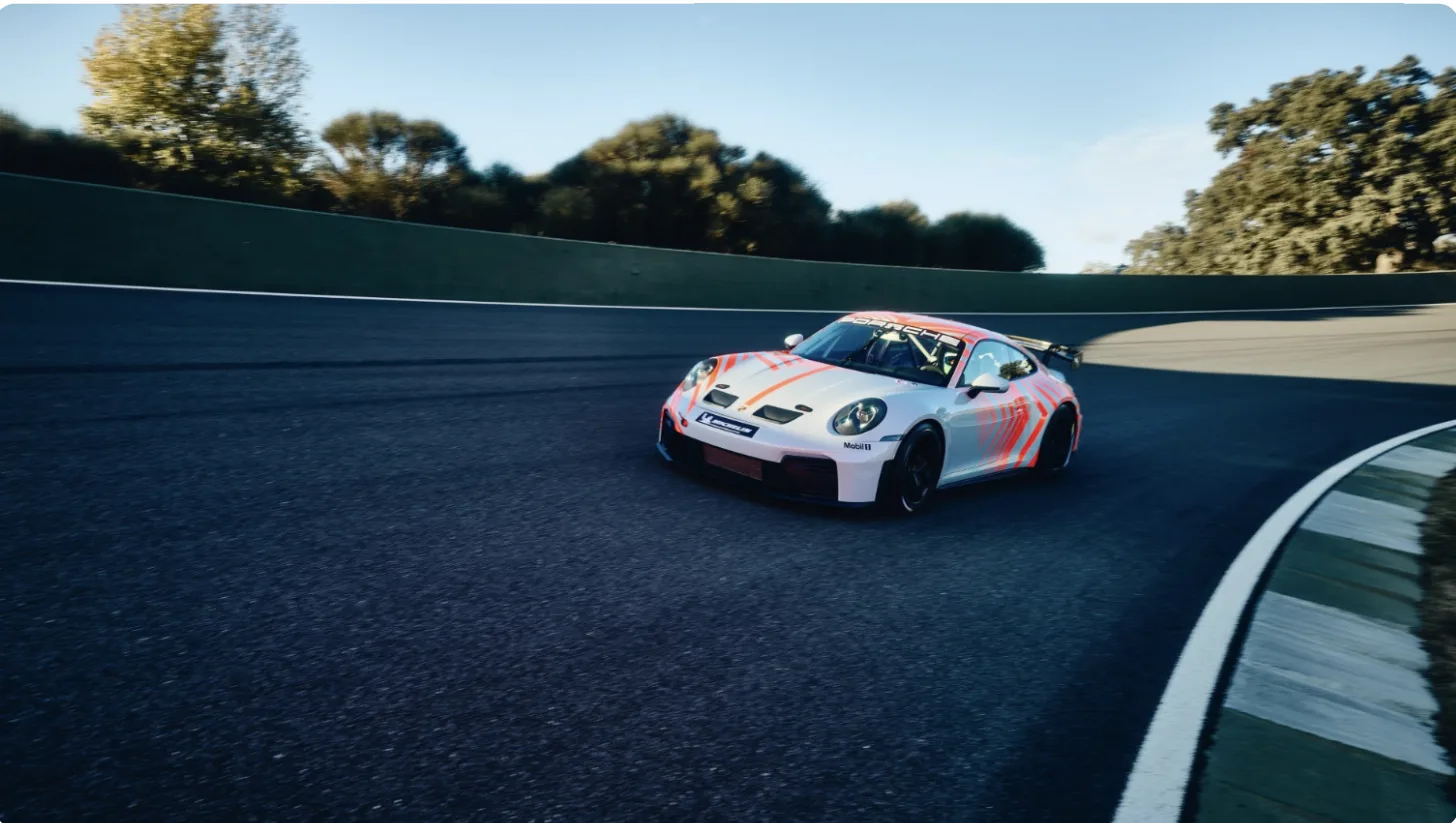
Porsche used to send new racers into customer motorsport by way of the Cayman. For more than a decade, the Cayman GT4 Clubsport and its most recent successor, the 718 Cayman GT4 RS Clubsport, were the first rung on Porsche Motorsport's ladder -- the car a gentleman driver bought before working up to a 911 Cup car or a full GT3 R. On August 26, Porsche retired that arrangement and replaced it with the 911 Challenge, a $275,000 race car built directly on the current 911 GT3 rather than the smaller, cheaper Cayman.
The 911 Challenge shares its dimensions and body with the production GT3 and keeps the road car's naturally aspirated 4.0-litre flat-six, tuned to 508 hp at 8,500 rpm with the same 9,000-rpm redline, paired with the GT3's seven-speed PDK. Weissach stripped the interior -- airbags, passenger seat, sound insulation and floor mats are gone, with 18 kg of ballast added back on the passenger side for balance -- and fitted a mechanically adjustable rear wing that can be set to four positions. Curb weight lands at 1,450 kg. It's the entry point below the outright 911 Cup racer Porsche introduced in 2025, and from the 2027 season it will be eligible across Porsche's worldwide one-make Challenges and Trophies.
Why the Air Conditioning Survived the Diet
What sets the 911 Challenge apart from the Cayman car it replaces isn't the extra power or the bigger badge -- it's what Porsche chose not to strip out. The car keeps the GT3 RS's steering wheel with its full complement of racing-specific switchgear, and, notably for a car this stripped, it keeps air conditioning. On a purpose-built racer built to save every possible kilogram, air conditioning is dead weight Porsche didn't have to include. Keeping it says the 911 Challenge is aimed at owner-drivers doing long stints on hot circuits in real comfort, not just a lap-time exercise for professionals who tolerate a sweatbox for twenty minutes at a time.
That's a detail with obvious relevance to the Gulf, where Porsche's one-make ladder already runs through the region: the Porsche Carrera Cup Middle East grids up across Bahrain, Saudi Arabia, Qatar, Abu Dhabi and Dubai, often on track days where ambient temperatures push well past what most circuits elsewhere in the world are built for. A customer racer that treats climate control as a functional necessity rather than a luxury to delete is a car engineered with exactly that kind of heat in mind, and it puts Dubai's active owner-driver scene -- already well stocked with GT3 and GT3 RS road cars -- closer to the front of the queue when 911 Challenge grids start forming for the 2027 season.
First Access
Be the first to know about new arrivals
Join our private list and receive an email the moment a new luxury or exotic vehicle arrives at our Al Quoz showroom.