
Porsche's Taycan Turbo GT Just Set the Fastest EV Lap Ever Recorded at the Nurburgring
A Sub-7-Minute Lap, Independently Certified
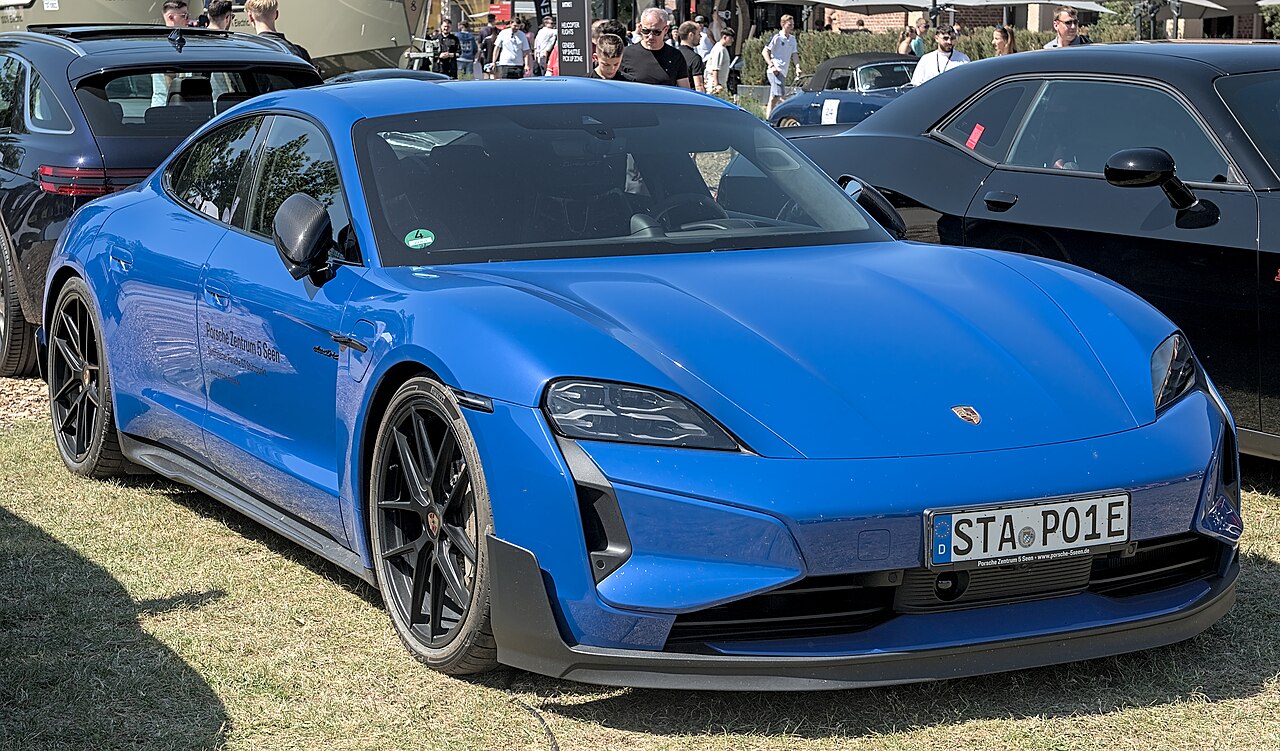
Porsche's Taycan Turbo GT, fitted with the Manthey Kit aerodynamics package, has lapped the Nurburgring Nordschleife in 6:55.533 — the fastest lap ever recorded by a production electric car around the 20.832km circuit, with the time notary-certified at the track. Development driver Lars Kern was behind the wheel. The Manthey Kit triples the car's downforce and raises system output to 804hp in standard mode, with up to 978hp available in Attack Mode and 1,019hp on Launch Control — numbers that put a road-legal electric sedan in territory normally reserved for dedicated track cars.
The run beats the previous EV class record, held by China's Xiaomi SU7 Ultra with its own Track Package, by more than nine seconds — a significant margin at Nurburgring lap-time scale, where records are usually broken by fractions of a second at a time. It also improves on Kern's own earlier Taycan Turbo GT time, set without the Manthey Kit, by roughly 12 seconds, which says a lot about how much a dedicated aerodynamics package alone can extract from a car that was already the most powerful series-production Porsche ever built. The Nordschleife itself is deliberately unforgiving on that point: 20.832km of elevation change, blind crests and off-camber corners that punish a car for weight and poor thermal management far more than a shorter, sanitised circuit would, which is exactly why an EV record here carries more weight than a straight-line acceleration figure ever could.
Why This Record Matters Beyond the Stopwatch
Electric cars setting genuine, independently verified performance benchmarks against a circuit as demanding and historically significant as the Nurburgring matters for a segment that's still fighting real skepticism from performance-car buyers over whether electric power can deliver a driving experience — not just an acceleration number — that justifies the price. A sub-7-minute Nordschleife time from a four-door production EV, beating a serious international rival in the process, is exactly the kind of proof point that shifts how seriously EV performance cars get taken by buyers who've been holding out.
Interest in high-performance EVs has been building steadily among GCC collectors who already own combustion-engine halo cars and are weighing whether to add an electric performance car to a collection rather than replace anything in it. A record run like this is exactly the kind of validation that moves that decision from "maybe eventually" to "worth sourcing now," particularly for buyers who want genuine track credibility rather than straight-line numbers alone.
That distinction matters more with EVs than almost anywhere else in the market right now, since the segment is still young enough that reputation and hard numbers haven't fully separated from hype — which makes an independently certified record like this one more meaningful than most.